The Fundamental Elements of a Sworn Statement
A legally sound affidavit is a written factual declaration submitted under an oath or formal affirmation administered by an authorized official. Unlike basic narrative letters or informal statements, an affidavit carries the legal weight of courtroom testimony given under penalty of perjury. Whether a county agency, private lender, or municipal court requests the document, its core purpose remains identical: confirming that the signer personally vouches for the absolute truth of every specific assertion listed on the page.
Every standard sworn statement requires three main structural components to satisfy official scrutiny. First comes the venue, identifying the specific state and county where the signing takes place. Second is the statement of facts, organized into clear, numbered paragraphs that establish who you are and what you directly witnessed or know to be true. Finally, the jurat certificate at the bottom provides space for your signature, the notary seal, and the official date, certifying that an oath was administered.
Signers frequently confuse notary jurats with routine document acknowledgments, creating costly procedural delays. An acknowledgment merely verifies your identity and confirms that you executed a document willingly. A jurat, by contrast, explicitly requires the notary to place you under an oath before you pick up a pen to sign. Signing an affidavit before the notary gives you the oath invalidates the jurat, meaning the entire document must typically be reprinted and executed from scratch.
Verifying Your Address With an Affidavit of Residence
A notarized affidavit of residency serves as formal proof of where you live when traditional utility statements or formal lease agreements are unavailable. This situation commonly arises for young adults living with parents, individuals residing with a domestic partner who holds the sole lease, or tenants renting rooms under informal subleases. In these scenarios, the primary property owner or leaseholder signs a sworn declaration detailing who resides on the premises, the date tenancy began, and the physical street address.

When drafting a proof of residence statement, precision prevents immediate administrative rejection. The document must state the complete physical address without using post office boxes or commercial maildrops, as administrative bodies require proof of physical domicile. The landlord or primary homeowner should clearly state their own legal status regarding the property, enumerate every occupant covered by the declaration, and explicitly confirm that the listed resident maintains continuous, daily occupancy at the location.
Receiving agencies typically request secondary residency documents to corroborate the homeowner's written statement. These supplementary records usually include bank statements, recent paystubs, medical bills, or vehicle registration receipts showing the applicant's name tied to that identical address. While a notarized residency affidavit establishes a solid baseline, combining the sworn letter with corresponding mail creates an ironclad evidentiary package that withstands strict verification audits.
School districts and municipal service departments routinely enforce their own specific affidavit formats to prevent enrollment fraud. If you need a notary affidavit of residence for local school registration or parking district permits, check the administrative department's website first. Many jurisdictions provide dedicated statutory templates that include mandatory legal warnings, meaning generic private letters might be rejected even if they are properly signed and sealed.
Meeting Strict Real ID Proof of Residency Standards
Securing a Real ID compliant driver's license or state identification card requires navigating rigorous federal standards enforced by local motor vehicle agencies. Unlike standard license renewals, Real ID protocols demand unquestionable proof of identity, lawful presence, Social Security status, and physical address. Most state departments of motor vehicles require two distinct residency documents bearing your current street address, dated within sixty to ninety days of your in-person application date.
Acceptable paperwork typically encompasses residential leases, mortgage statements, property tax assessments, utility bills, homeowner insurance policies, or official government correspondence. Difficulties arise when an applicant does not hold any household accounts in their personal name. Many states permit an adult family member or primary homeowner to accompany the applicant to the office, providing their own address documents alongside a sworn co-residency declaration signed directly before an agency clerk.
Preparing these files requires rigorous attention to typographical consistency across all submitted pages. Inconsistencies involving apartment numbers, directional street suffixes, or minor name discrepancies can trigger instant denial by motor vehicle examiners. Before arriving at your appointment, review each statement to ensure street spellings match your identification documents exactly, eliminating unexpected obstacles during Real ID verification processing.
Drafting an Affidavit of Support for Immigration Proceedings
In immigration proceedings, an affidavit of support functions as a binding financial contract between an individual sponsor and the federal government. The sponsor formally promises that an incoming immigrant will receive adequate financial backing so they will not become reliant on government public assistance. While civil affidavits merely assert narrative facts, immigration sponsorship forms establish enforceable financial responsibilities that typically persist until the immigrant naturalizes, works forty qualifying quarters, or leaves the country permanently.
The primary federal form utilized for family-based permanent residence petitions is Form I-864, whereas Form I-134 often serves nonimmigrant visa categories or humanitarian parole requests. The petitioner must prove a sustained household income meeting or exceeding the federal poverty guidelines for their household size. When an individual sponsor's baseline earnings fall short, federal regulations permit adding a qualifying joint sponsor who meets the statutory financial thresholds independently.
Sponsors must assemble extensive financial exhibits to support their filed declaration, including the most recent federal income tax transcripts, Form W-2 statements, recent pay vouchers, and proof of legal status. Preparing this documentation demands absolute transparency, as submitting fraudulent figures or omitted liabilities carries federal penalties. For complex sponsorship structures or international document gathering, working with specialists in power of attorney and legal paperwork notarization helps keep statutory paperwork organized and fully compliant.
Using Private Affidavits of Financial Support
Outside federal immigration programs, private institutions frequently require customized affidavits of financial support. Foreign students applying for international exchange study, private university enrollments, commercial lease applicants with limited credit histories, and medical patients seeking specialized care often rely on private financial pledges. In these contexts, an independent sponsor signs a sworn declaration promising to cover educational fees, housing expenses, or personal maintenance during a defined calendar period.
An effective private affidavit of support sample contains several critical data points to assure institutional adjudicators. It must identify the sponsor, describe their relationship to the applicant, specify the total dollar amount or percentage of living costs being underwritten, and affirm that funds are liquid and readily transferable. Generic promises lacking precise dollar amounts or timeframes often fail review because admissions boards require clear proof of financial solvency.
Institutional review boards usually require supporting bank letters, investment portfolio summaries, or certified balance statements matching the figures referenced in the text. Drafting an affidavit of support template for private use requires drafting clean, factual statements without extraneous personal narratives. Keeping the tone objective, listing the bank institutions holding the pledged funds, and executing the jurat before an impartial notary public yields an authoritative document that satisfies compliance officers.
Formalizing a Domestic Partner Declaration
A declaration of domestic partnership allows unmarried couples who share an interdependent domestic life to establish their legal relationship for institutional purposes. Employers, health insurers, municipal benefit programs, and housing cooperatives frequently accept a properly executed domestic partner declaration to extend family health insurance coverage, life insurance beneficiary rights, and survivorship perks that were historically reserved strictly for legally married spouses.
State and corporate policies governing domestic partnerships vary substantially across the country. In states that offer statewide registries, couples file formalized statutory declarations with the secretary of state or county clerk to access comprehensive rights. In jurisdictions lacking formal state-level domestic registry statutes, couples frequently rely on private company affidavits that outline mutual cohabitation, shared household financial commitments, and an agreement to be responsible for each other's basic living expenses.
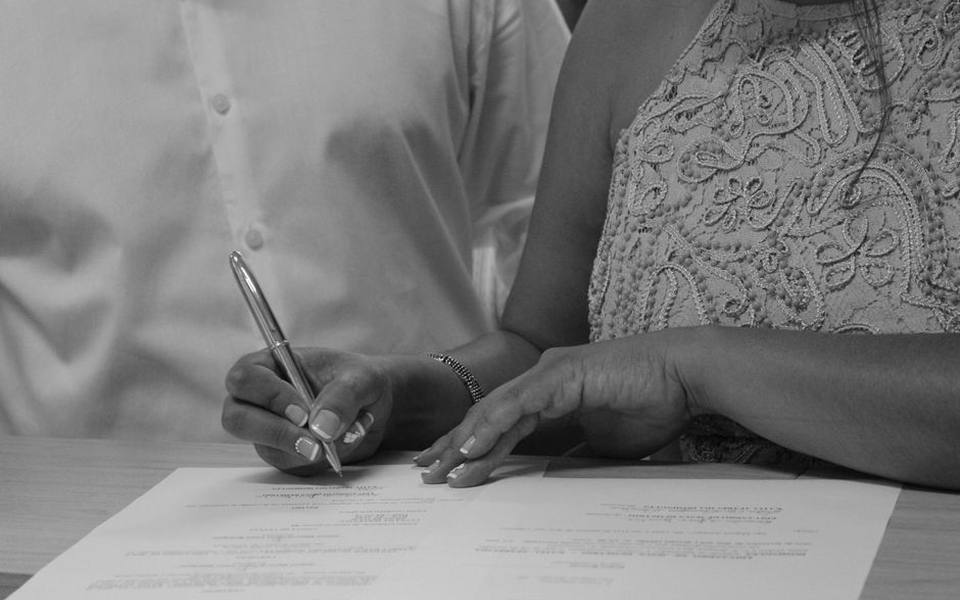
To execute a valid domestic partnership statement, both individuals typically appear together before an authorized notary. The document typically declares that both parties are at least eighteen years old, mentally competent, not legally married to another person, unrelated by blood closer than permitted under marriage laws, and sharing a common primary residence. Accompanying proof, such as joint bank statements or joint tenancy leases, is often required by human resource departments when processing enrollment.
Resolving Discrepancies With a One and the Same Affidavit
Name discrepancies on vital records, real estate deeds, academic diplomas, and foreign passports can stall real estate closings and passport applications. A one and the same affidavit, technically called an affidavit of identity or dual-name declaration, solves this issue. Through this instrument, a declarant formally swears that two or more slightly divergent names appearing across various official records represent one identical individual.
These documentation variances happen routinely following marriages, divorces, informal Anglicized name adoptions, compound hyphenated surnames, or common administrative clerical typos on historical records. For instance, if an individual's birth certificate reads 'Jonathan Robert Davis' but their property title shows 'John R. Davis,' an affidavit bridges the chain of ownership. The instrument details every variation, explains why the difference occurred, and declares that both identities represent the affiant.
County deed recorders, title insurance underwriters, and foreign visa processors rely on these affidavits to maintain unbroken legal records. When drafting the text, you must clearly state your true legal name first, followed by the specific alternate variations found on supporting documents. Attach certified copies of the underlying records showing the conflicting variations as labeled exhibits, allowing the reviewing officer to verify the rationale quickly and approve the pending transaction.
Documenting Single Status for Overseas Marriages
When an American citizen decides to marry overseas, foreign civil registries routinely require formal proof that the individual is legally free to enter into a marriage contract. Because the United States maintains no central federal marriage registry, the federal government cannot issue a comprehensive national document confirming bachelorhood. Instead, foreign authorities expect the citizen to present a sworn certificate of freedom to marry, widely known as an affidavit of single status or certificate of no impediment.
In this instrument, the declarant formally swears under oath that they are currently unmarried, detailing any prior marriages, legal divorces, or former spouses' deaths with attached decree records. Some foreign jurisdictions insist that close family members or lifelong acquaintances sign supporting affidavits confirming the individual's unencumbered marital status. The statements must explicitly confirm that no existing civil union, common-law marriage, or pending legal impediments exist in any jurisdiction.
Because these documents must satisfy civil authorities in foreign countries, local notarization represents only the initial step of the legal pathway. After local notarization, foreign governments generally demand authentication via an international certificate before they will accept the paperwork. Using dedicated apostille notary services ensures the document receives appropriate state-level certification or embassy legalization, preventing cancellations of destination wedding dates or foreign residency filings.
Choosing the Right Notarization Method for Sworn Declarations
Executing sworn legal statements requires choosing a notarization path that fits your schedule, document requirements, and geographical limitations. Traditional in-person signings remain standard, requiring signers to present valid government-issued photographic identification directly to a commissioned notary public. However, busy professionals, individuals with mobility challenges, and parties involved in urgent real estate or legal closings often need faster, more flexible options.

When business deadlines require paperwork execution outside routine banking hours, after-hours mobile notaries travel directly to homes, hospitals, or private offices on evenings and weekends. Mobile professionals verify identity documents in person, administer the mandatory verbal oath, witness physical signatures, and affix their official seals immediately on site. This hands-on service prevents processing stalls when documents must be filed first thing the following morning.
Alternatively, signers can complete their paperwork remotely from any computer using remote online notarization (RON) platforms. Remote notarization uses multi-factor identity proofing, credential analysis, and encrypted two-way audiovisual feeds to let you swear your oath and sign digitally. However, before booking an online session, always verify that your receiving agency or court explicitly accepts electronically notarized affidavits, as some jurisdictions still mandate physical wet-ink signatures on recordable legal declarations.
Preventing Document Rejections by Official Agencies
Even properly sworn affidavits face sudden administrative rejection if standard drafting rules are overlooked. One common error involves blank fields or incomplete sections left inside the narrative body. Notaries cannot legally certify or stamp any instrument containing visible blank lines, as omitted spaces create an unacceptable risk of fraudulent alterations after the seal is affixed. Always fill every blank space with accurate data or write 'N/A' to indicate the section was intentionally completed.
Another persistent problem stems from non-compliant notary certificates attached by automated document generation software. State notary laws establish precise statutory wording that must appear on jurat forms, and certificates lacking mandatory phrases or proper venue headings are rejected by county recording clerks. If your drafted document lacks appropriate jurat language, the notary must attach a compliant loose certificate rather than stamping over your text.
Finally, ensure your identification documents are current and fully aligned with your legal name before meeting your notary. Expired driver's licenses, damaged identification cards, or name mismatches will halt your appointment immediately, as notaries cannot legally lower verification thresholds regardless of personal explanations. Preparing clean drafts, keeping your identifying records current, and working with seasoned professionals ensures your sworn declarations clear review on the first attempt.
Published 2026-09-20 · reviewed with each rebuild, last September 2026.
Find notaries near you
The directory lists 5,516 notaries by state and city — pick your state or use the “Near me” button in the header.
More guides
-
 Service
A Practical Guide to Power of Attorney: What It Means, Typical Costs, and Proper Execution
-
 Service
Where and How to Get Fingerprinted for an FBI Background Check
-
 Owning
Understanding Real Estate Deeds: Transfer on Death, Deed of Trust, and Mortgages
-
 Service
What Is an Apostille? How to Get Birth Certificates and Documents Apostilled
-
 Service
Do Banks Notarize Documents? Free Branch Options, Notary Fees, and Licensing Guide
-
 Owning
Essential Legal Documents: Bills of Sale, Estate Affidavits, and Corporate Records
-
 Money
MoneyHow Much Does a Notary Cost? Standard Fees, Travel Rates, and Extra Charges Explained
-
 Owning
Which Documents Need to Be Notarized? Leases, Notes, and Directives Explained
-
 Buying
Complete Bill of Sale Guide: Vehicle, Boat, and General Templates
-
 Service
Form I-9 Employment Eligibility Verification: Acceptable Documents and Rules
-
 Service
LLC Formation Documents, Residence Proof Affidavits, and Legal Verification
-
 Owning
How to Become a Notary Public: Supplies, Stamps, Training, and E&O Insurance
-
 Service
Fingerprinting and Live Scan Background Checks: Methods, Locations, and Cards
-
 Service
A Consumer Guide to Notary Public Services and Remote Online Notarization
-
 Service
Estate Planning Essentials: Wills, Codicils, and Healthcare Power of Attorney
-
 Buying
Vehicle Bill of Sale and Title Transfer Notarization Guide
-
 Service
Live Scan Fingerprinting and FBI Background Check Services Guide
-
 Service
Form I-9 Employment Verification and Identity Proofing Guide
-
 Service
Notary Training, Commissioning, Bonding, and E&O Insurance Guide
-
 Owning
A Complete Guide to Power of Attorney: Types, Forms, and Execution
-
 Money
MoneyHome Refinance and Cash-Out Mortgage Guide: Loan Closing, Rates, and Calculations
-
 Buying
Vehicle Title Transfer and Bill of Sale Guide: DMV Process, Forms, and Notarization
-
 Owning
Estate Planning and Real Estate Document Guide: Wills, Deeds, and Affidavits
-
 Owning
Articles of Incorporation and Corporate Filing Guide: LLCs, Nonprofits, and Bylaws
-
 Buying
Essential Notary Supplies Guide: Stamps, Embossing Seals, Journals, and Scanners
-
 Service
Remote Online Notarization and Mobile Notary Services Guide: How It Works and Costs
-
 Safety
Minor Travel Consent and Passport Documentation Guide: Forms, Rules, and Notarization
-
 Service
International Document Apostille, USCIS Translation, and Legalization Guide
-
 Money
MoneyProperty Tax Appeal and Protest Guide: Process, Filing Forms, and Representation
-
 Buying
Motor Vehicle Bills of Sale and Title Transfers: A Complete Guide
-
 Money
MoneyA Practical Guide to 401(k) Hardship Withdrawals and Emergency Access
-
 Owning
Heavy-Duty Fasteners, Scanners, and Document Handling Equipment for Notaries
-
 Service
Live Scan Fingerprinting, Background Checks, and Identity Verification: A Complete Practical Guide
-
 Service
Notary Public Training, Essential Supplies, and Digital Workflow Guide
-
 Owning
Corporate Formation and Governance: Articles of Incorporation and Board Minutes
-
 Buying
Vehicle Bill of Sale and Title Transfer Notarization Guide
-
 Money
MoneyMortgage Cash-Out Refinancing: Equity Rules, Liens, and Closing Procedures
-
 Service
Certified Translation Services and State Department Legalization
-
 Service
A Practical Guide to Fingerprinting Services, LiveScan, and Identity Verification